
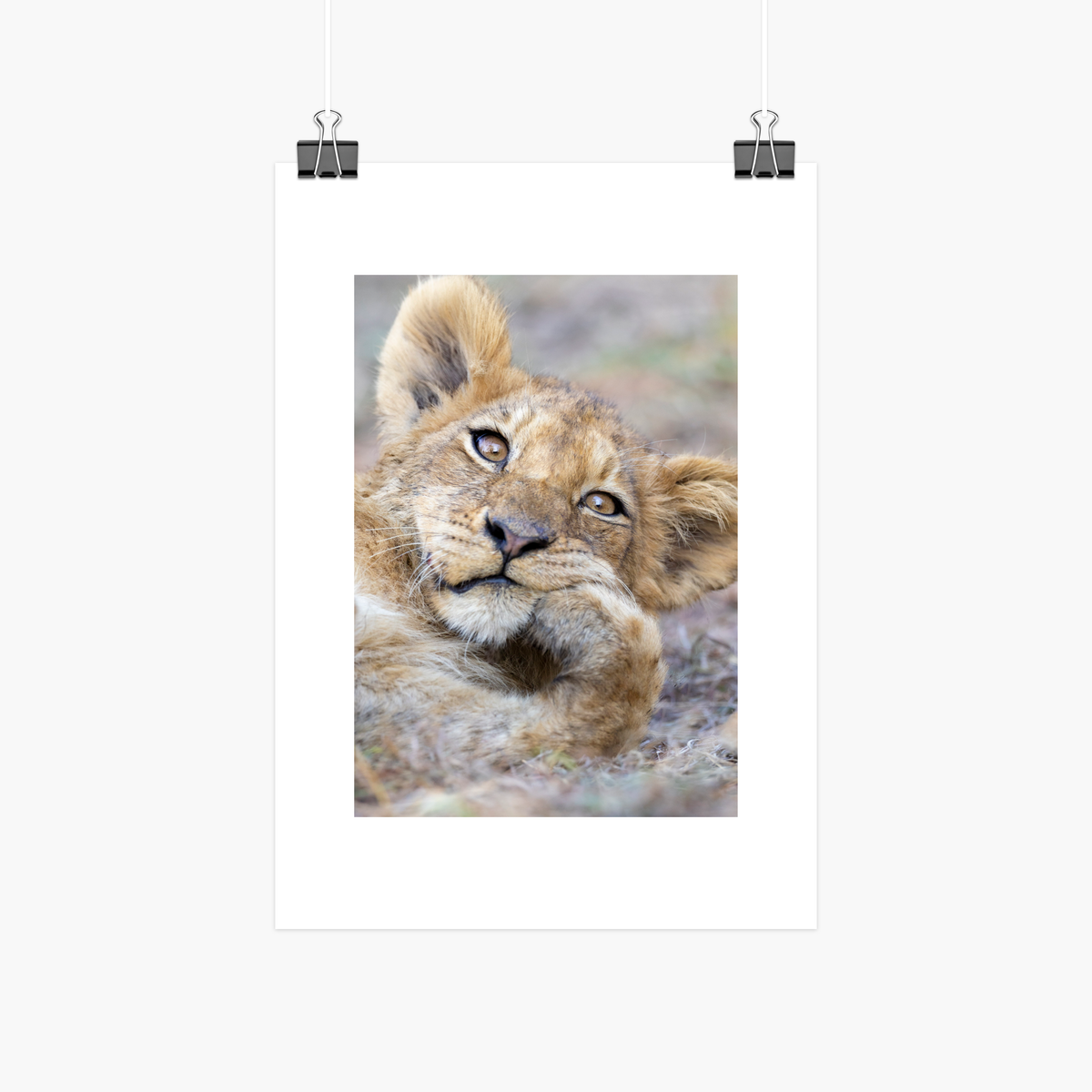
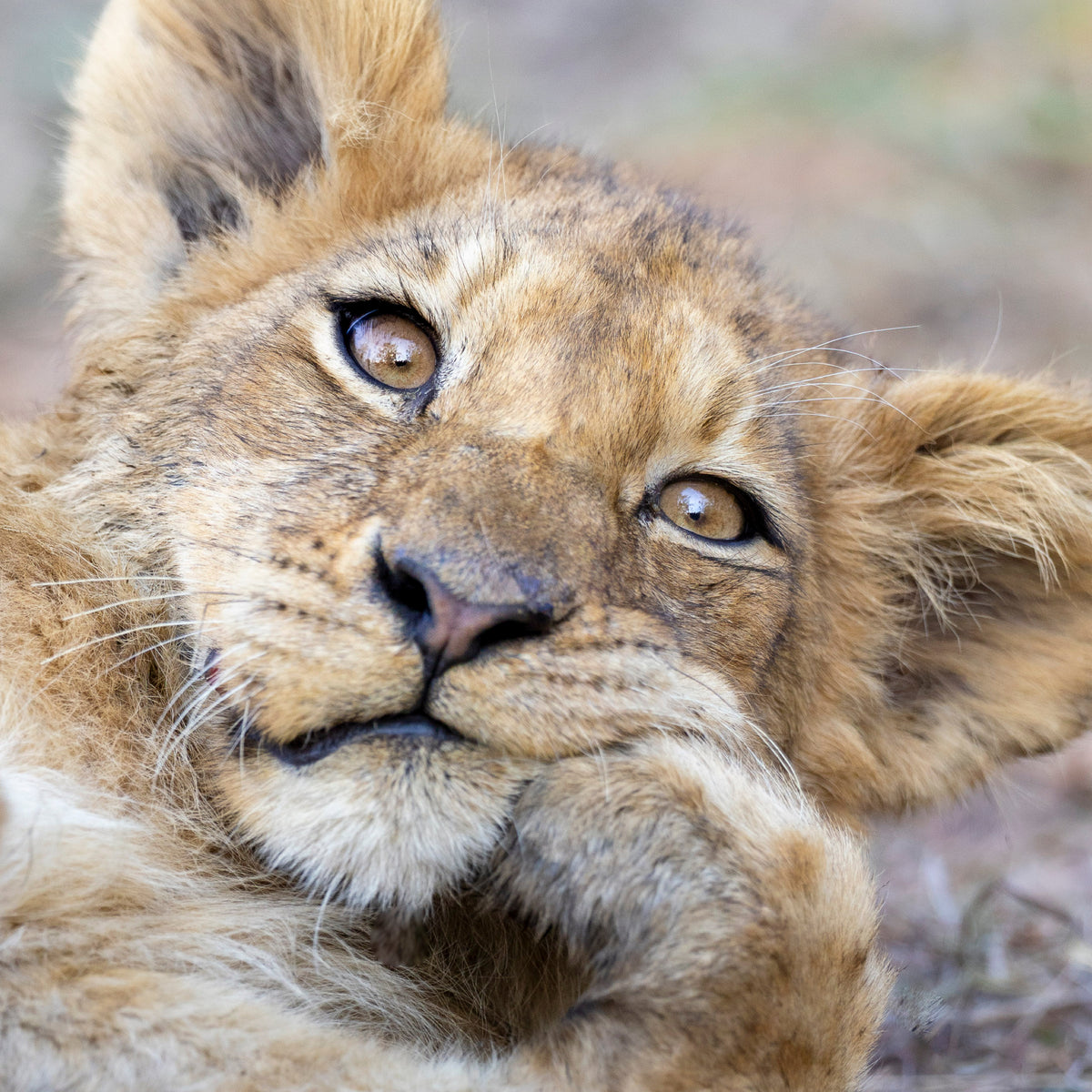
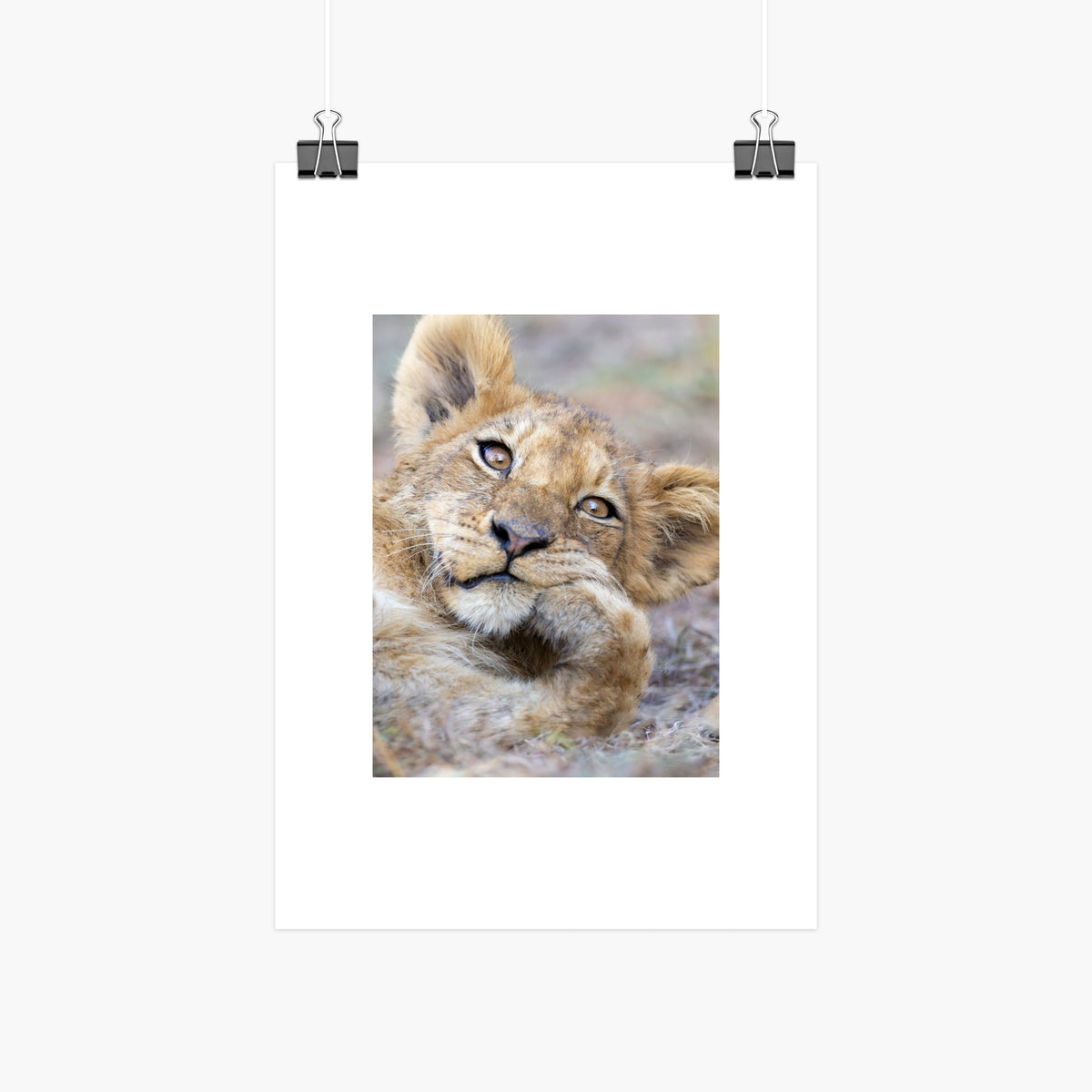
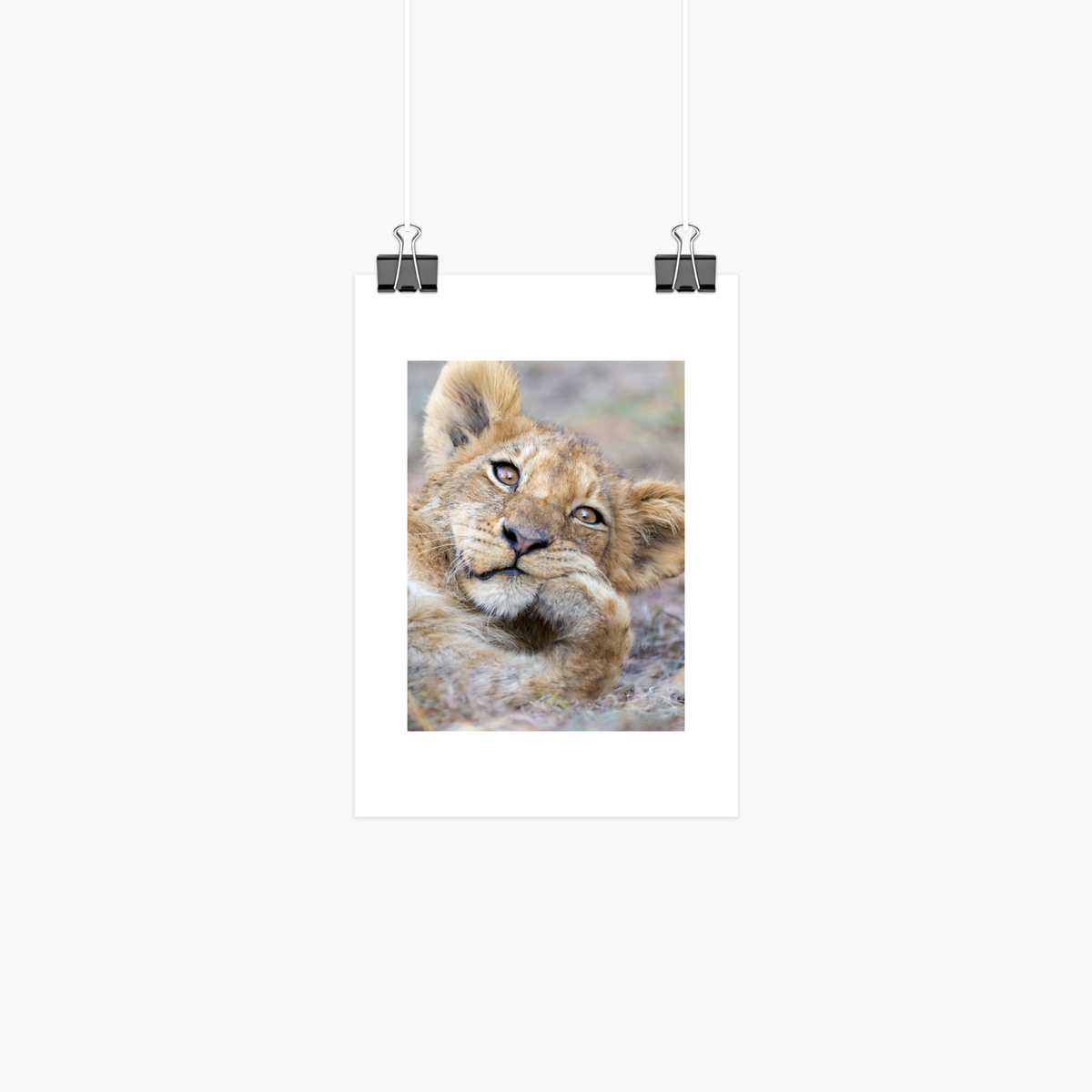
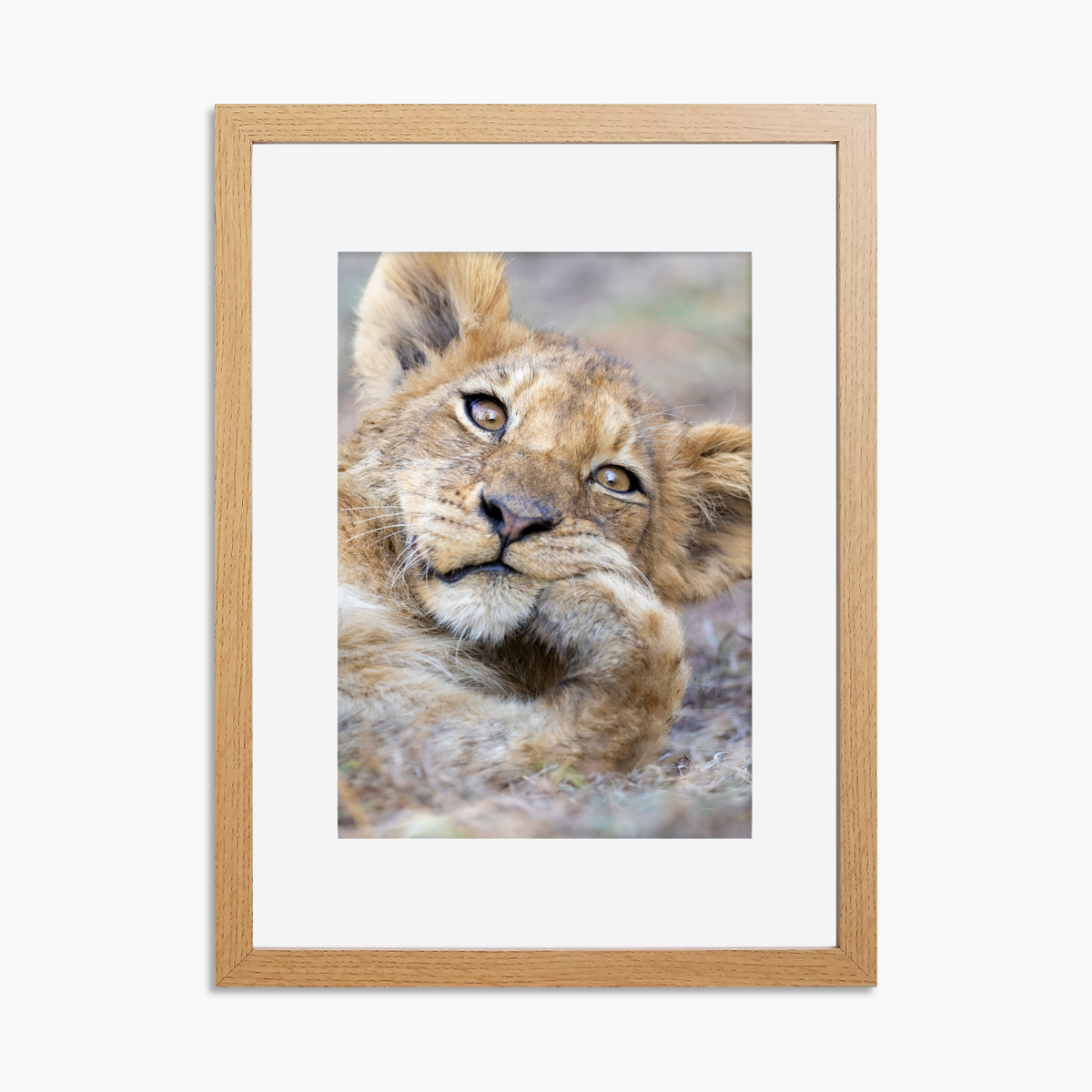
Lion Cub Print
- Cute lion cub print on Premium 260 g/m² satin paper
- Limited edition - only 50 ever printed
- A range of sizes, perfect for desks, shelves and walls
- Ideal for wildlife lovers and nature-themed interiors
- Free UK shipping and eco-friendly packaging
Estimated Delivery: calculating…
AI is now embedded in almost every part of modern life, and photography is no exception. Cameras, software, and distribution platforms all rely on increasingly complex algorithms. I don’t pretend photography exists in some untouched, pre-digital bubble.
That said, there is a clear line I choose not to cross.
In my wildlife photography, I do not use generative or reconstructive AI tools. This includes features such as generative remove, AI sharpening, AI refocus, or AI de-noise that invents or replaces detail. If a tool is creating pixels that were not recorded by the camera at the moment of capture, I don’t use it.
Why? Because wildlife photography, at its core, is about witnessing real moments in the natural world. The unpredictability, the missed shots, the imperfect light, the noise at high ISO - these are not flaws to be erased, they are part of the reality of working with wild animals on their terms. When software begins to hallucinate feathers, fur, eyes, or backgrounds, the photograph stops being a record and becomes an illustration.
My post-processing is limited to traditional, transparent adjustments: exposure, contrast, colour balance, tonal control, and careful, non-generative noise reduction and sharpening where needed. These edits aim to present the scene as faithfully as possible, not to improve or "fix" nature after the fact.
This is not a judgement on how others choose to work. Photography is a broad church, and there is room for art, experimentation, and AI-assisted creativity. My choice is simply about honesty - with myself, with the viewer, and with the animals I photograph.
When you see an image here, you are looking at a real moment, captured as it happened. Nothing added. Nothing invented.
Please Note
Mounting hardware and frames are not included with prints and are only shown for illustrative purposes.
Need another size?
If you would like a size that is not listed, please get in touch.
Delivery
Free UK delivery on all prints. All prints are printed on-demand and shipped via Royal Mail Tracked 48. To accommodate the production time, please allow between 3-5 working days for delivery.
Returns
If you are not happy with your product for any reason, please return in its original condition with all original packaging for a full refund.
Choose options
About The
Lion
Follow @ciaronwaltonphoto


